
We’ve always found that September has a particular energy. The summer slowdown is over, and our inboxes are filling up again, and there’s a collective sense of “right, let’s get on with it”.
It’s likely you’ll dig out your plan from last year (which may just be in the back of your mind) and repeat the same activities they were doing in June. Same campaigns, same channels, same assumptions. Before you know it, it’s December, the year is over, and you’re left wondering what actually worked.
The next 90 days are a genuine opportunity. Take a moment to pause before you push forward. Here’s why.
An example that is making a difference for a client
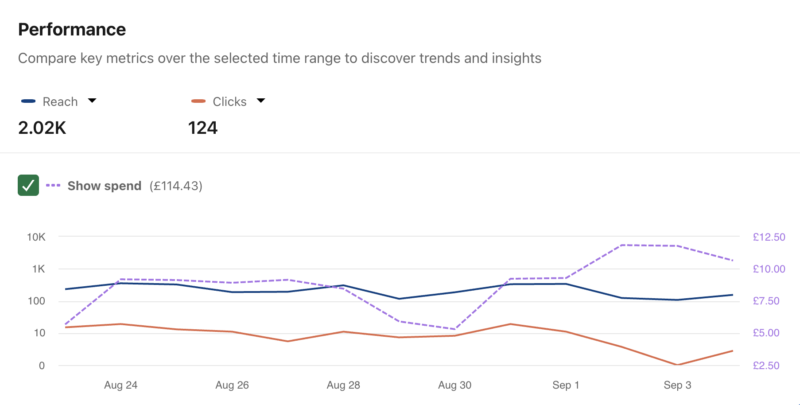
Earlier this year we took over the marketing of a software business. They spend £300 per month on Google Ads, and have done for years. And so we improved it a bit, got the approval percentage rate up into the high 90s and, with a few tweaks, have let it run.
The conversion rate is £2.50, and we got that down a bit from what it was, too. But as September approached we thought, why are we just doing this because it’s been there for a few years? Is there a better way to spend £300 a month?
So we set up a LinkedIn campaign, stole £200 budget (so we didn’t just abandon the Google Ad campaign and left it running at £100) and tested it for a week.
What a difference. The conversion rate came down to about 92p.
The questions worth asking now
Rather than jumping straight into the same old tactics, September is the ideal time for a quick audit. Not a lengthy strategic review, just an honest look at what’s happened so far:
What actually worked in the past year?
Not what you hoped would work, or what you spent the most on, but what genuinely delivered results? Look at the data. Which campaigns brought in leads? Which content got engagement? Which channels delivered customers, not just clicks?
What’s underperforming?
We all have marketing activities we keep doing out of habit. That monthly newsletter with a 2% open rate. The social platform where you post but never see any return. The paid ads that generate traffic but no enquiries. Be honest about what’s not pulling its weight.
What should you stop doing?
This is the hardest question. Stopping something feels like giving up. But every hour and every pound spent on something that doesn’t work is time and money not spent on something that could.
What could realistically be improved before December?
You have 90 days. That’s enough time to make meaningful changes, but not enough to transform everything. Pick one or two areas where improvement is achievable and would make a genuine difference.
Are you positioned for the January pipeline?
The work you do in Q4 shapes how Q1 begins. If your pipeline goes quiet in January, the seeds of that problem are usually planted now.
Learn from what others are doing
One of the most overlooked exercises in marketing planning is competitor analysis. Not to copy what others do, but to learn from it.
Your competitors are running their own experiments. Some will work, some won’t. By paying attention, you can:
- Spot gaps they’re missing: channels they’re ignoring, messages they’re not communicating, audiences they’re not reaching.
- Avoid their mistakes: if a competitor tried something that clearly flopped, you don’t need to repeat the experiment.
- Identify what’s resonating: if a competitor’s content is getting shared, or their ads keep appearing, there’s probably a reason.
- Benchmark your own position: how does your messaging compare? Your visibility? Your offer?
This doesn’t require expensive tools or weeks of research. Spend an hour looking at your top three competitors’ websites, social channels, and any ads you can find. Sign up for their newsletters. See what they’re saying and how they’re saying it. Or get an agency like is to do it.
We have a client in the sports industry that we do mystery shopping for, checking out their competition, including competitor prices. That’s competitive advantage.
You’ll almost certainly spot something useful; either an opportunity they’re missing or an approach worth testing yourself.
The value of a fresh perspective
When you’re inside a business, it can be hard to see it clearly. You’re too close to the day-to-day, too aware of the reasons behind every decision, too invested in the things you’ve already built.
Sometimes an outside perspective helps. Not because external people are smarter, but because they’re not carrying the same assumptions.
A quick conversation with someone outside your business can surface obvious opportunities you’ve stopped noticing. It might be a messaging tweak, a channel you’ve dismissed, or simply permission to stop doing something that isn’t working.
Start with one question
If you only do one thing after reading this, make it this: look at your marketing from the last six months and ask yourself, “If I could only keep doing one of these activities, which would it be?”. The answer will tell you where your focus should be.
Everything else is either supporting that priority, or getting in the way of it. Let us know where we can help.